Indonesia’s health emergency reserve workforce (Tenaga Cadangan Kesehatan/TCK) serves as the country’s national mechanism for surge capacity for health workforce during public health emergencies and disasters. Spread across Indonesia, TCK personnel face significant challenges in accessing standardised and timely training. As of February 2026, the national TCK dashboard recorded 35 810 individual reserves, 331 teams and 633 emergency medical team (EMT) members, highlighting the need for accessible learning approaches that reaches responders regardless of location.
The World Health Organization (WHO) Indonesia supported the Center of Health Crisis, Ministry of Health, in developing the first electronic learning (e-learning) module on Basic Health Crisis Management for the health workforce. Through technical assistance on instructional design, content structuring and alignment with national emergency response systems, the course brings together essential knowledge on national policies, health workforce safety and security – including the prevention of sexual exploitation, abuse and harassment (PRSEAH) – as well as surveillance, early warning, risk assessment and health crisis information management. These core elements are consolidated into a structured online curriculum tailored to strengthen TCK that will be available on Plataran Sehat, the Indonesia Ministry of Health e-learning platform.
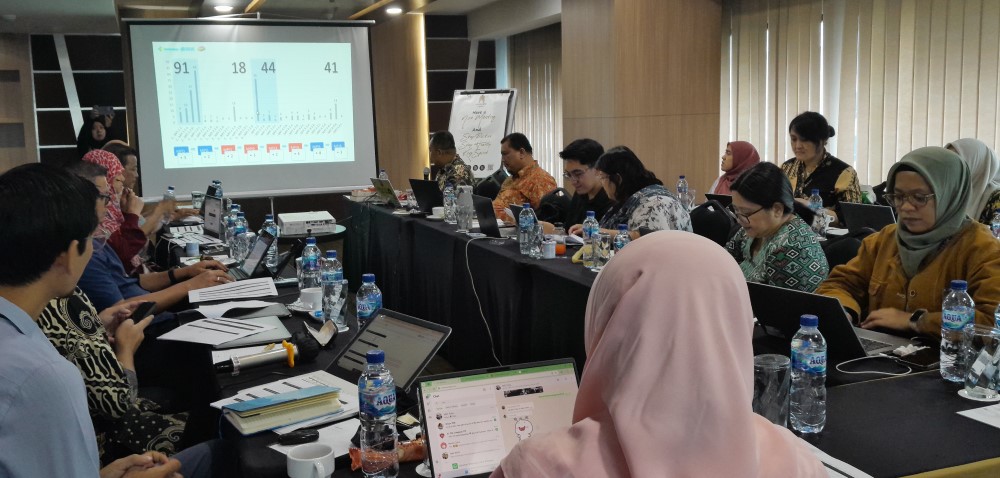
Discussion with health sub-cluster members during the development of the e-learning modules on Basic Health Crisis Management Training. Credit: PREDIKT
As the first in a planned series, this e-learning provides standardized foundational knowledge for TCK and other responders, enabling wider reach, flexible participation and faster scaling of preparedness capacities. Additional modules are planned to follow.
During emergencies, response quality depends on how quickly trained personnel can mobilize with a shared understanding of roles, coordination mechanisms and operational standards. By making foundational crisis management training available online, Indonesia strengthens its surge capacity and supports more coordinated responses particularly for deployments of reserve teams and EMT members, while reducing barriers related to distance, time and cost.
Written by Lintang Sibarani, National Professional Officer (Emergency and Humanitarian Action), WHO Indonesia